By: Dean Crowe, Founder & CEO Last year, when COVID-19 hit, I thought about our Rally families and how they handle everything that is...
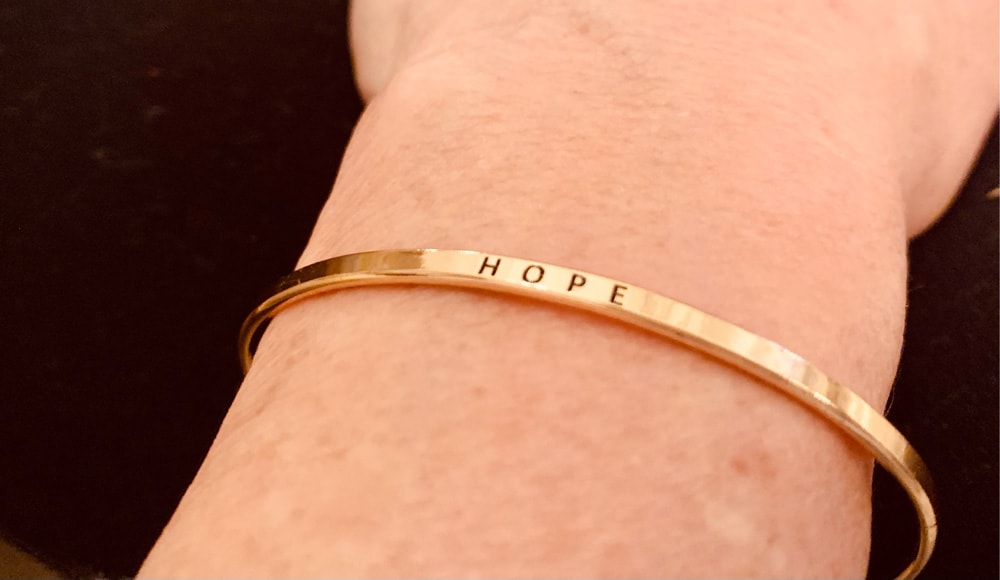
Adjust, Readjust and Hope
read more
By: Dean Crowe, Founder & CEO Last year, when COVID-19 hit, I thought about our Rally families and how they handle everything that is...
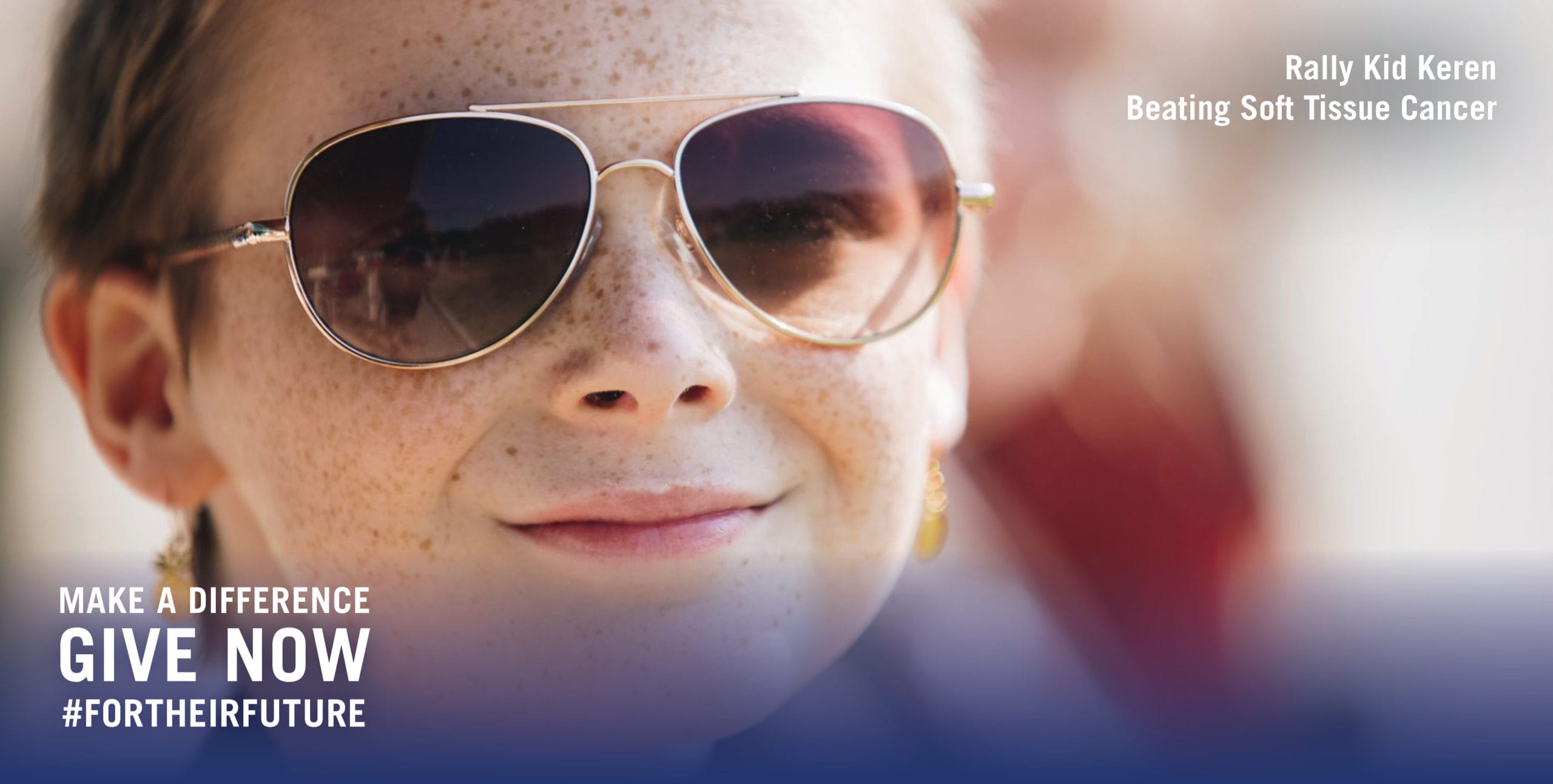
Childhood cancer doesn’t just affect childhood. The effects of fighting cancer can last a lifetime. When you give to Rally, you help kids...
During this pandemic, my mantra has been “adjust and readjust.” I have shared that I learned this from the Rally families who never cease...
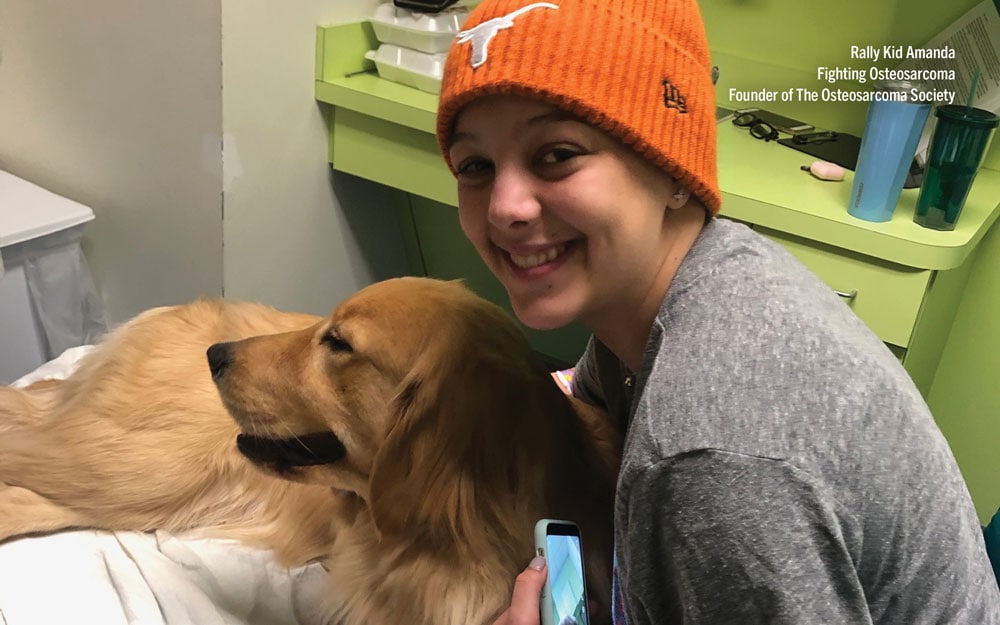
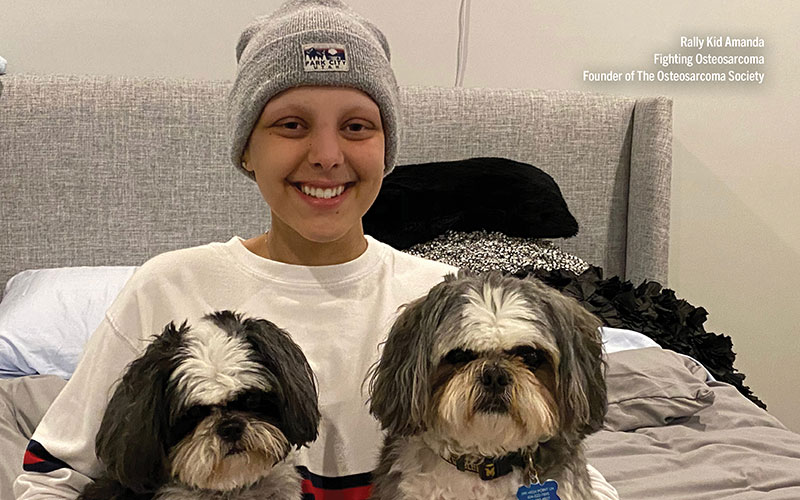
Hi everyone! My name is Amanda. I am 17 years old and a rising senior in high school. I am a Rally Kid, as well as the founder of The...
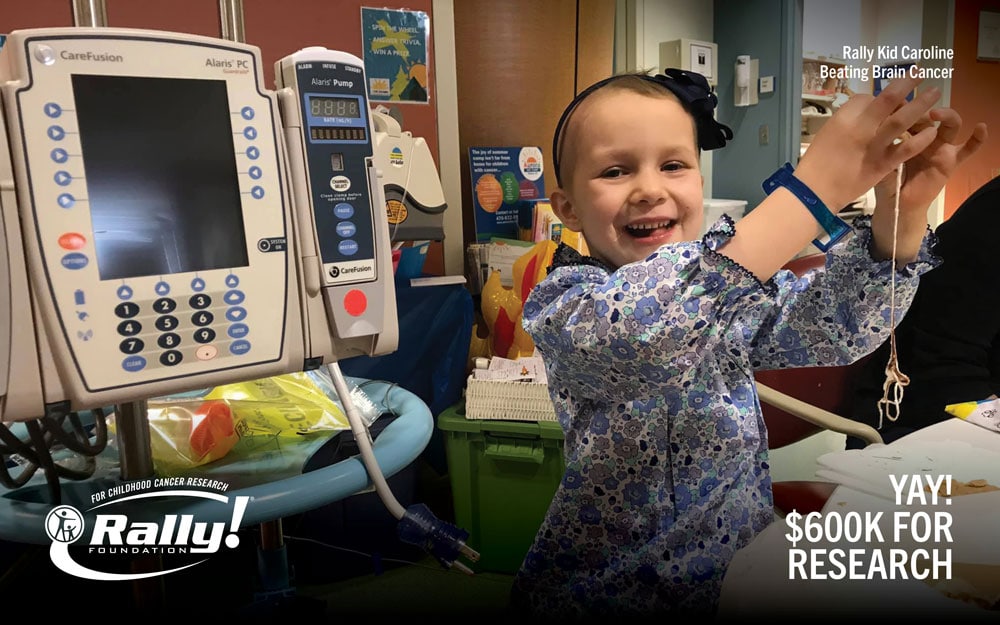
We are living in unprecedented times. As the world grapples with a number of issues, including the COVID-19 pandemic, nothing seems normal...
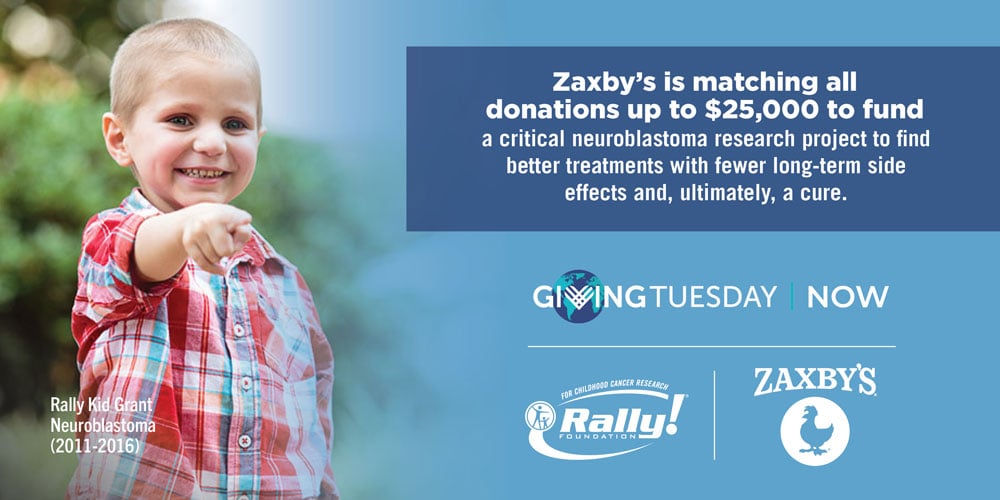
By June Gossling The gift of tomorrow. This phrase echoes in my mind as I attempt to put thoughts to paper about this week’s Giving...
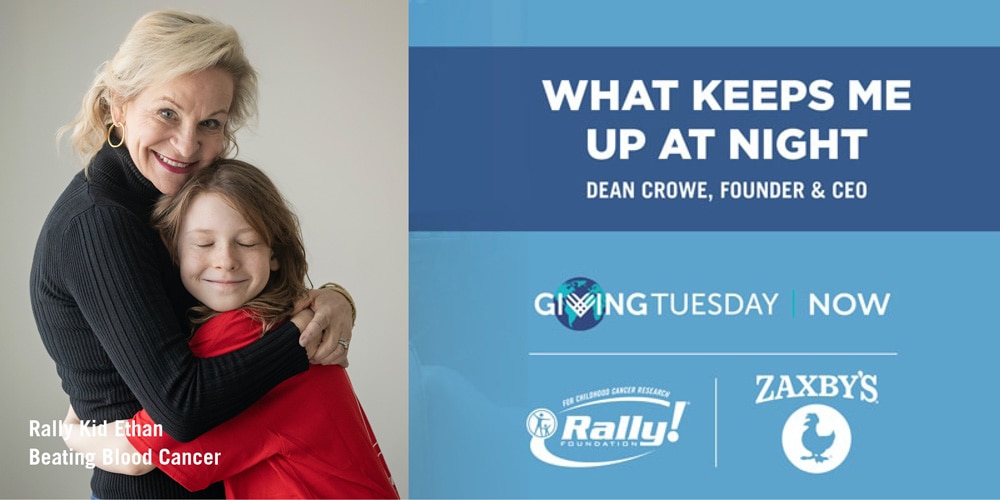
Working for Rally is such a blessing, and such a challenge. It’s a blessing to get to know these families who are fighting the childhood...

Rally Researcher, Medical Advisory Board member and pediatric oncologist Dr. Michael Kinnaman is the recipient of Rally’s Postdoctoral and...
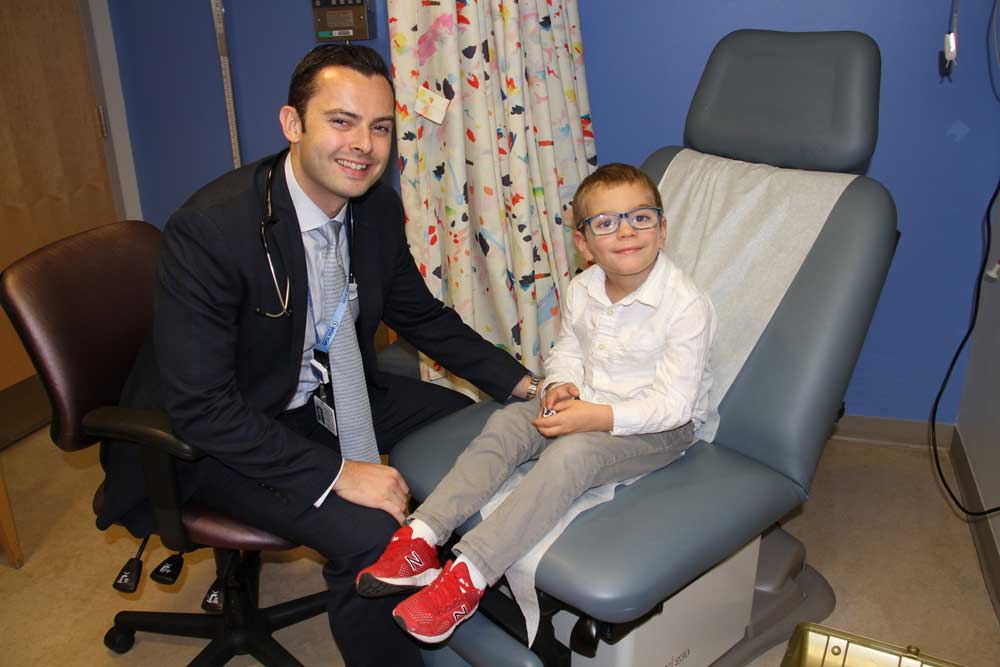
Rally Researcher and pediatric oncologist Dr. Michael Kinnaman received a Rally Postdoctoral and Clinical Research Fellow Grant. In part...
Could you use some good news? We have some good news. Actually, we have some GREAT news! Rally Foundation for Childhood Cancer Research...
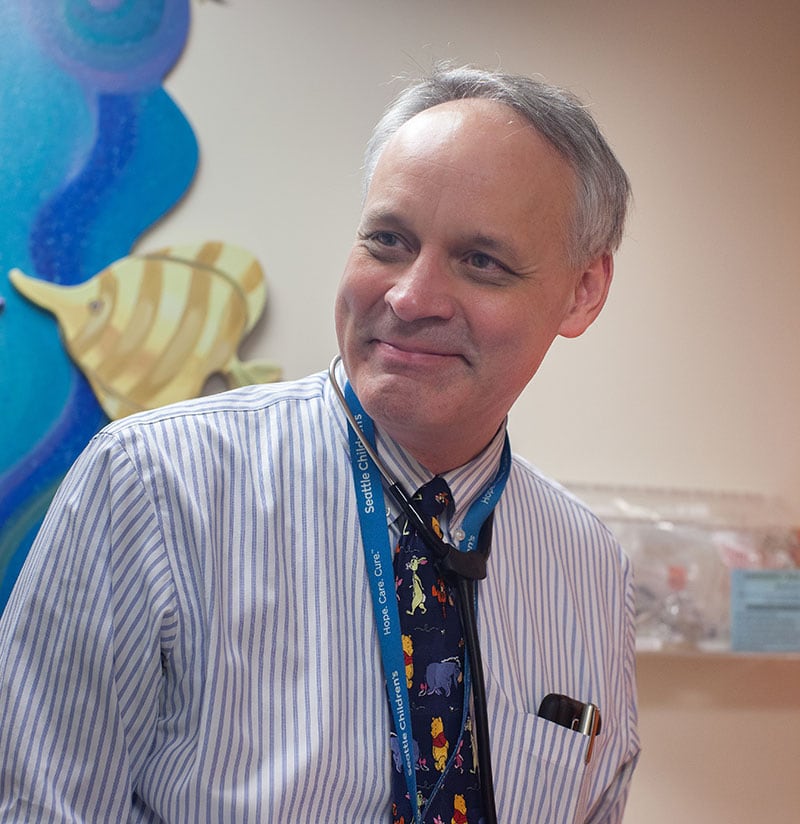
Rally was pleased when it was announced that the newly elected chair of the Children’s Oncology Group (COG) was going to be Dr. Doug...
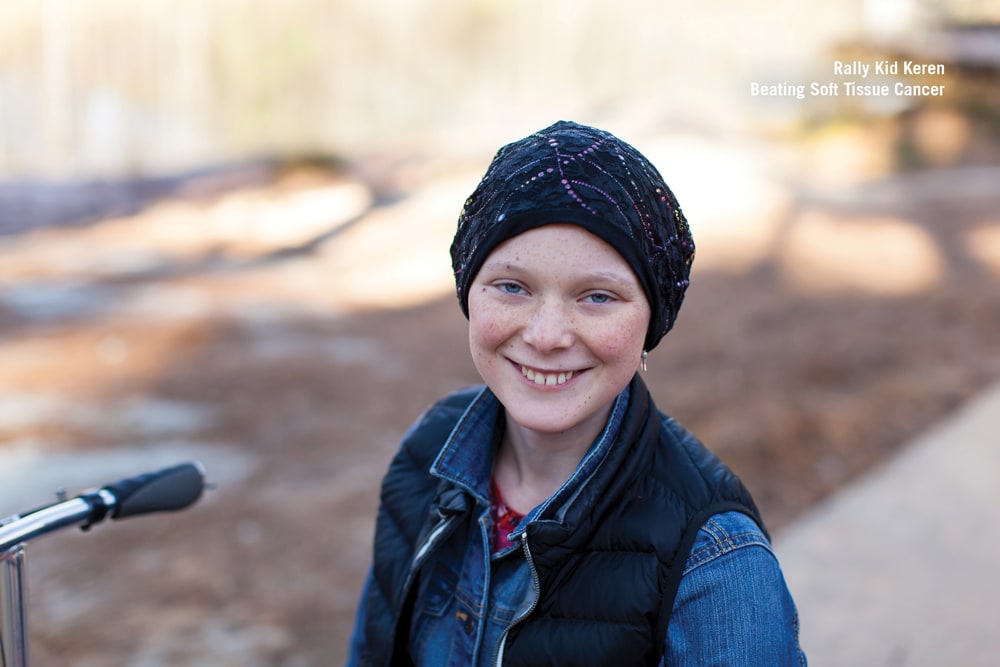
Thank you for caring about kids fighting cancer, and thank you for giving toRally For Their Future. Rally Kid Brecklynn, who is six years...
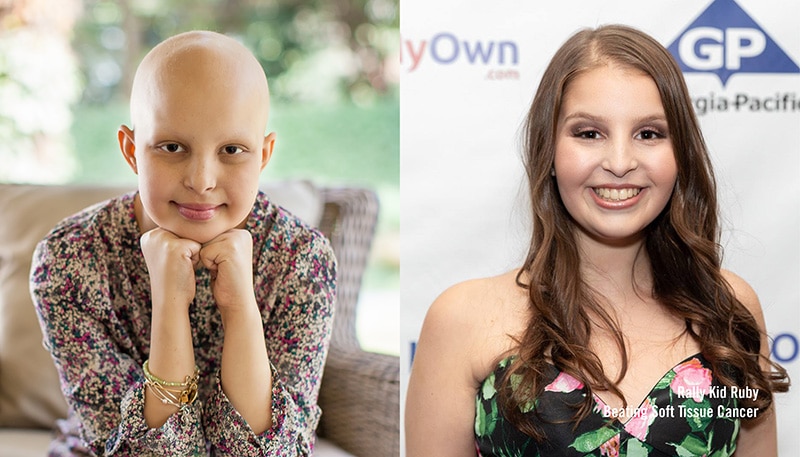
You might remember Rally Kid Ruby from Year End Giving three years ago. She was diagnosed with embryonal rhabdomyosarcoma, a form of soft...
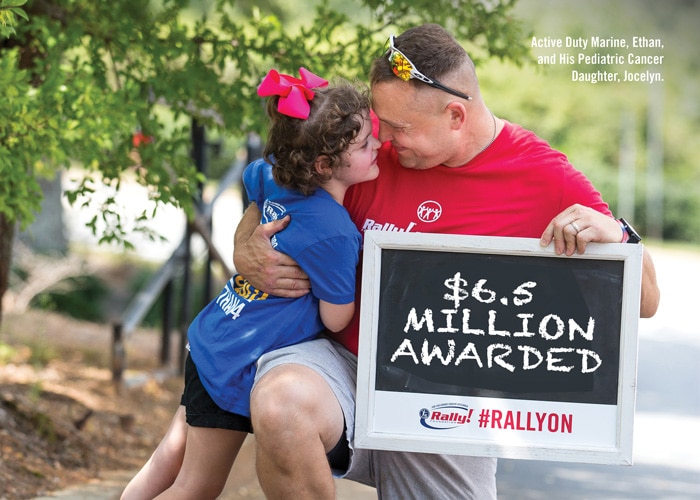
By Dean Crowe They say it takes a village. Thank you all for being our village. You called the U.S. Congressional Offices of the DoD...
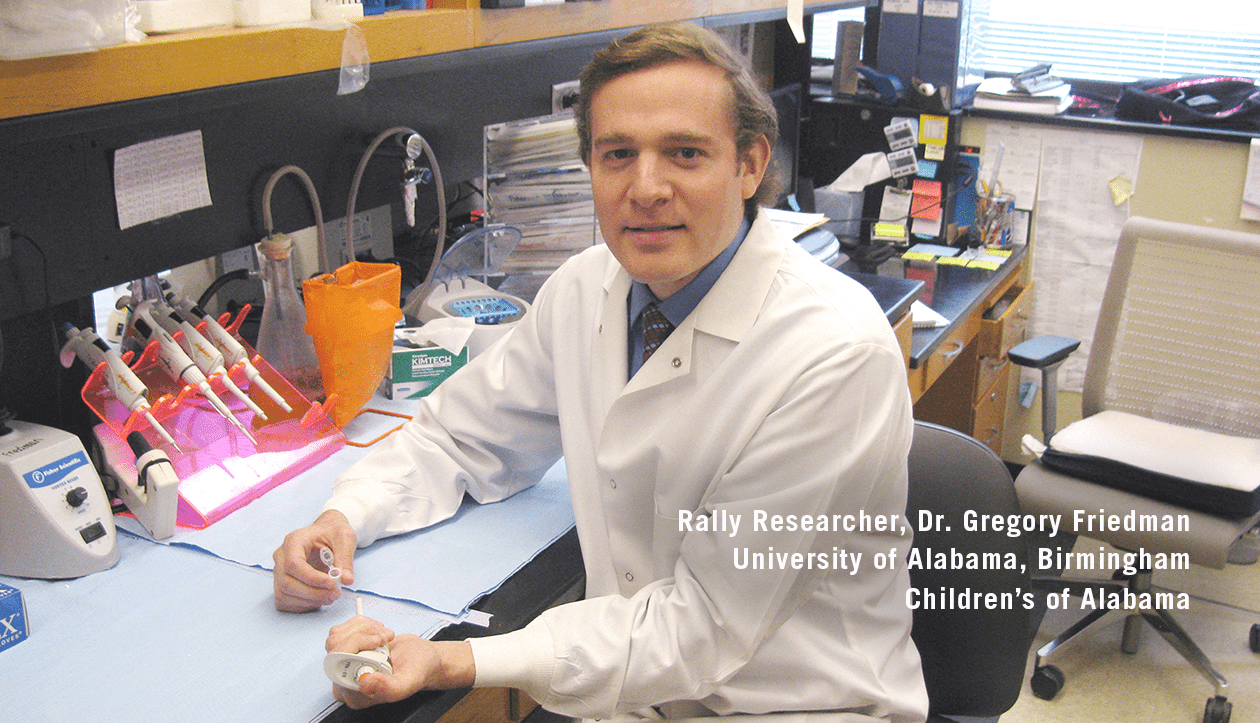
As a Rally Researcher and the primary investigator at the University of Alabama at Birmingham, Gregory Friedman, M.D. is devoted to...
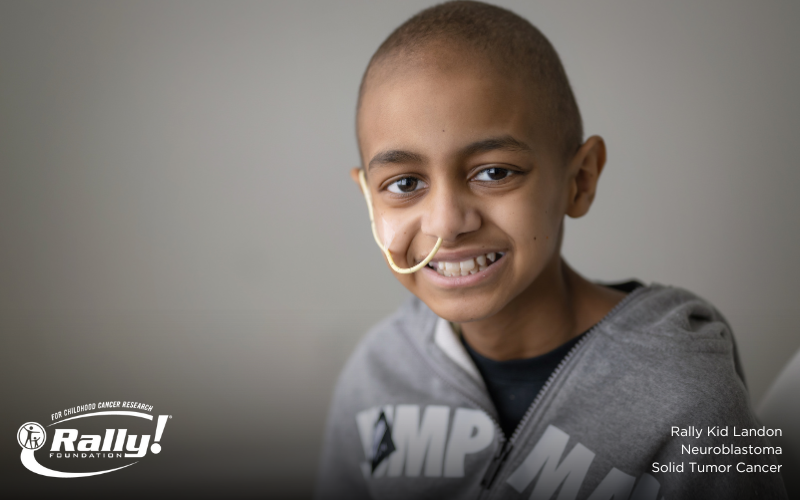
Neuroblastoma is a cancerous tumor that develops in the nervous system of babies and young children. It can also occur, rarely, in adolescents. A neuroblastoma tumor often affects immature nerve tissue called neuroblasts. The most common area for neuroblastoma to appear is in the adrenal glands, which sit above the kidneys. Adrenal glands produce hormones that control body functions such as digestion, blood pressure, breathing and heart rate. Neuroblastoma can also begin in other areas of the...
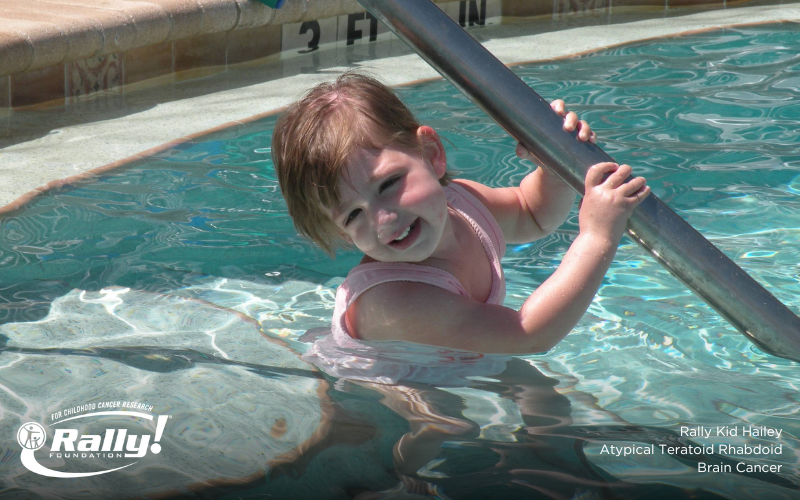
Atypical Teratoid/Rhabdoid Tumor (AT/RT) is a rare and fast-growing tumor that typically originates in the brain and spinal cord. These tumors most often occur in the part of the brain called the cerebellum, which controls movement and balance, or in the brain stem, which controls vital functions like breathing and heart rate. AT/RT mainly occurs in children under the age of three, but it can occur in older children and very rarely in adults. AT/RT is found in fewer than 3% of children with...
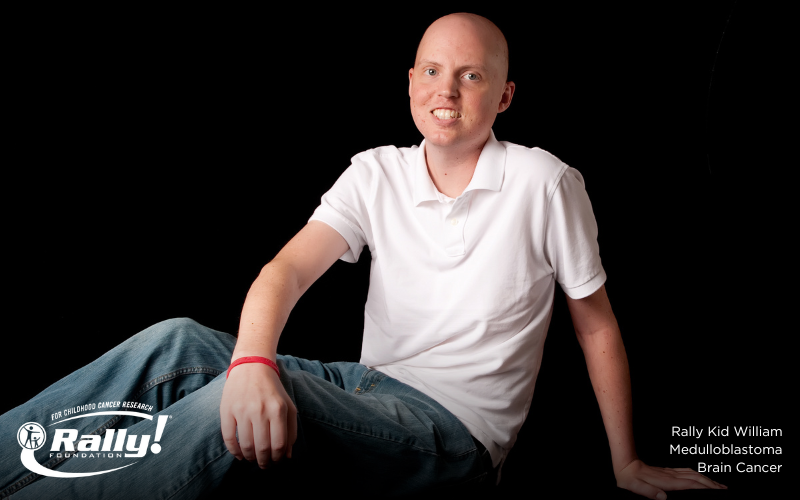
Medulloblastoma is a type of brain cancer that’s most commonly found in children. “Medulloblastoma starts in the cerebellum, which is located in the back of the brain,” explained Rally-funded Researcher Dr. Jezabel Rodriguez-Blanco, Assistant Professor, Department of Pediatrics at the Medical University of South Carolina. “It is a fast-growing tumor that often compresses the ventricle that brings the protective cerebrospinal fluid to the brain. The cerebellum is the part of the brain that...
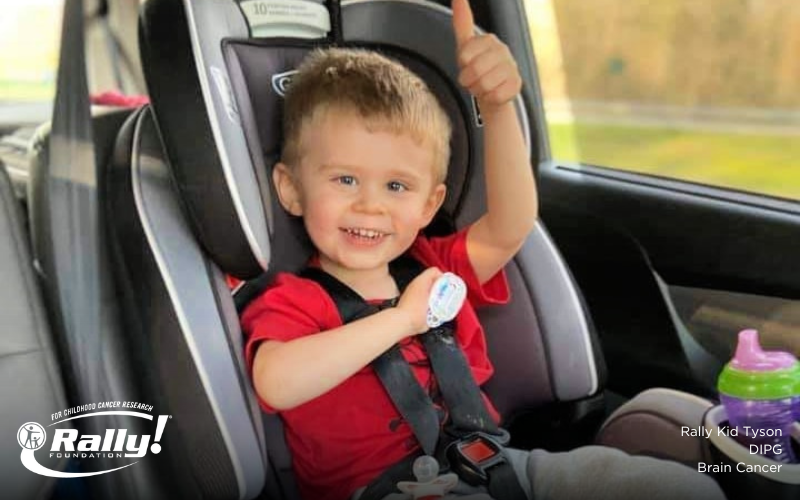
Diffuse intrinsic pontine glioma (DIPG) is a brain tumor found in a part of the brain stem—above the back of the neck and connected to the spine—called the pons. The pons is a vital part of the brain, controlling critical bodily functions like breathing, swallowing, blood pressure, heart rate, eyesight and balance. DIPG occurs almost exclusively in children; most often between the ages of four and 11. DIPG accounts for roughly 10-15% of all brain tumors in children. These tumors—called gliomas...
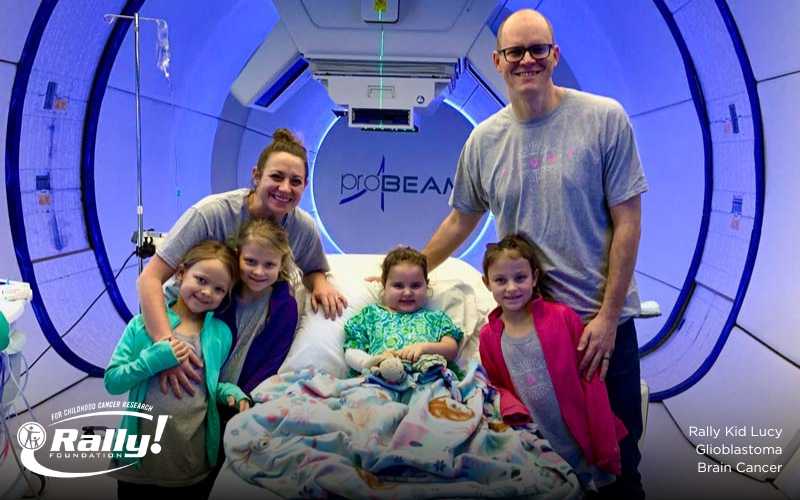
“Glioma” is a general term for a group of tumors that begin in glial cells—the supporting cells of the brain. Gliomas are classified based on their location and by the type of glial cell—astrocytes, oligodendrocytes or ependymocytes—from which they arise. Thus, many different types of brain tumors are classified as gliomas, like astrocytomas, oligodendrogliomas, ependymomas, brain stem gliomas and glioblastomas. About half of all pediatric brain and spinal cord tumors are gliomas. Gliomas are...
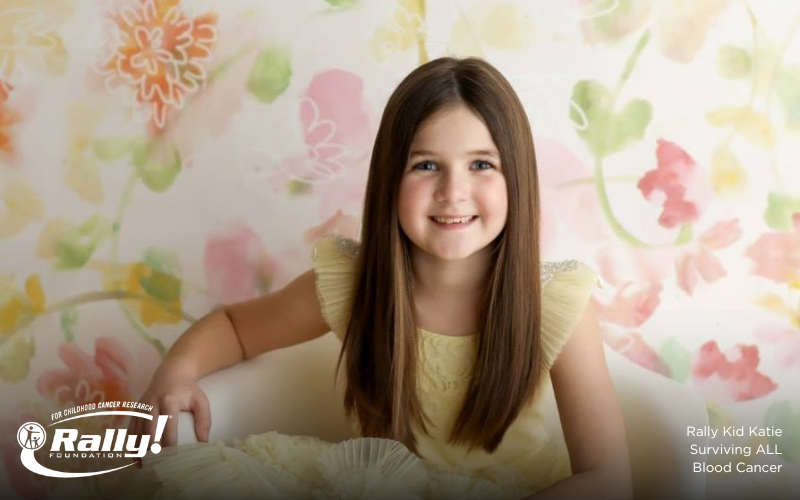
Acute lymphoblastic leukemia, also called acute lymphocytic leukemia, or ALL for short, is a type of blood cancer that causes bone marrow to overproduce a type of white blood cells called lymphoblasts. ALL is the most common type of cancer that affects kids, accounting for roughly 30% of all cases of childhood cancer. Lymphoblasts are immature white blood cells that are responsible for identifying and destroying foreign invaders like bacteria and viruses. When someone has ALL, the bone marrow...