The Heart of Survivorship: How Rally Funding Helped Prevent Heart Failure in Childhood Cancer Survivors
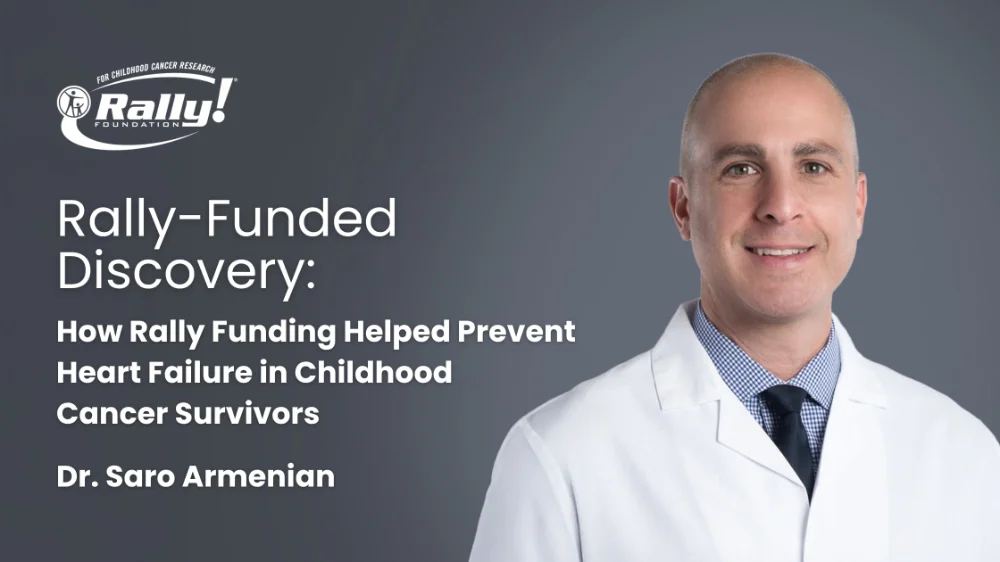
For many kids who beat cancer, the battle does not end when treatment does. Years later, they can face new health challenges caused by the very treatments that saved their lives. One of the most serious is heart failure, a condition that can quietly develop over time and deeply affect survivors’ health and quality of life. That is why early research to prevent it is so critical.
With early support from the Rally Foundation for Childhood Cancer Research, Saro Armenian, D.O., MPH, from City of Hope, launched a first-of-its-kind clinical trial to find safe, effective ways to protect survivors’ hearts for life.
Rally’s Early Support Sparked Breakthrough Research
Rally funding made it possible to take the first step: testing whether a low-dose blood pressure medicine called carvedilol could safely improve heart function in childhood cancer survivors.
This early support allowed Dr. Armenian and his team to:
• Evaluate safety and feasibility to determine if survivors could take carvedilol safely and whether it might improve their heart health.
• Gather key data to build the foundation needed to apply for larger grants.
• Secure federal funding by using Rally’s early results to earn a major grant from the National Institutes of Health.
Turning Early Research Into National Impact
With NIH support, Dr. Armenian and his team led a large national study through the Children’s Oncology Group, the world’s largest organization devoted to childhood cancer research.
This landmark study, known as COG Study ALTE1621, included nearly 200 childhood cancer survivors across dozens of hospitals nationwide. It tested whether low-dose carvedilol could improve long-term heart function after cancer treatment.
What the Results Showed
The study’s results, published in Lancet Oncology, were groundbreaking:
• Carvedilol improved heart function in survivors compared to placebo.
• The medication was safe and well tolerated in children and young adults.
• It became the largest placebo-controlled study of its kind ever completed.
A later analysis, published in JACC: CardioOncology, revealed even more:
• The drug worked especially well for certain subgroups of survivors.
• These findings are now helping scientists design the next generation of clinical trials to further refine treatment.
Without Rally’s early investment, this study, now shaping how doctors care for childhood cancer survivors, might never have happened. Rally’s seed funding launched the initial pilot study, built research infrastructure and collaborations across multiple hospitals, and enabled a national clinical trial that changed survivorship care standards.
This work is improving lives for hundreds of childhood cancer survivors and ensuring that the hope of a cure also means a healthy future.
This is why early-stage research funding matters.
This is the power of philanthropic seed investing.
This is Rally.