Rally-Funded Research Helps Kids with Brain Tumors Get the Right Treatment
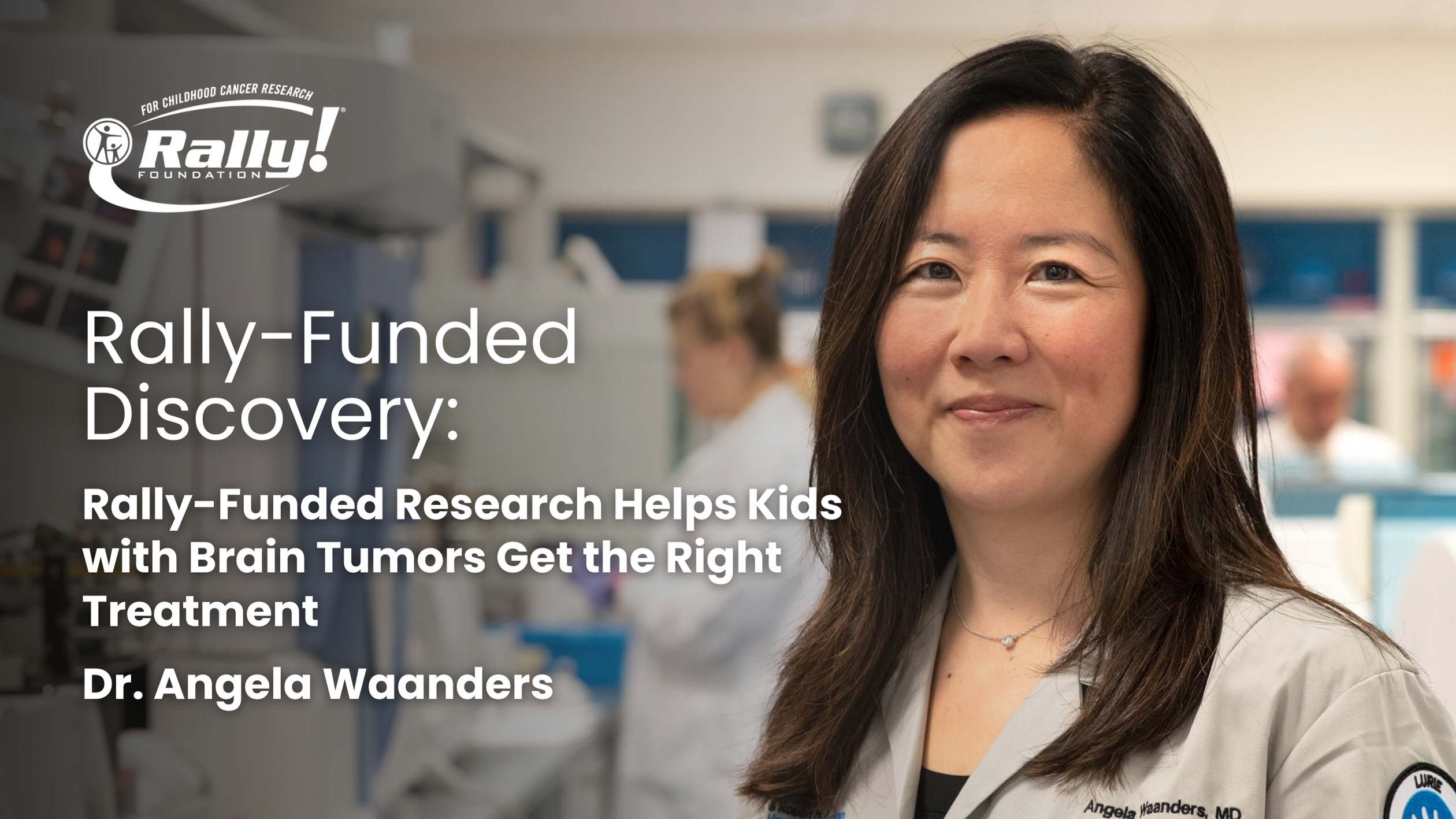
When Angela Waanders, M.D., M.P.H, was just beginning her research career at Children’s Hospital of Philadelphia, Rally Foundation for Childhood Cancer Research awarded her a $20,000 seed grant to help answer a big, urgent question:
Why did the same cancer drug help some kids’ brain tumors but make others worse?
Dr. Waanders was studying a gene called BRAF, which helps control how cells grow. When BRAF mutates, it can lead to cancer. Her research focused on two different types of BRAF mutations:
- BRAF V600E mutation: This is a tiny change that makes cells grow way too fast, like a gas pedal stuck down.
- BRAF fusion: This occurs when BRAF gets stuck to another gene, creating mixed-up instructions that also lead to cancer.
Her discovery?
A drug that worked well for tumors with the BRAF V600E mutation actually made BRAF fusion tumors grow faster.
It was a game-changing moment.
This Rally Foundation-funded research showed that doctors need to know exactly which kind of BRAF mutation occurred in the tumor before choosing a treatment. That knowledge helped lead to two FDA-approved drugs for kids with low-grade gliomas:
- Dabrafenib and trametinib for V600E mutations
- Tovorafenib for BRAF fusions or relapsed tumors
Dr. Waanders helped enroll patients in both clinical trials. Today, she’s using real-world data to improve treatment decisions and outcomes for children with brain tumors.
And it all started with one Rally grant.
This is why early-stage research funding matters.
This is the power of philanthropic seed investing.
This is Rally.