Neuroblastoma is a hard-to-treat cancer that mostly affects kids. One of the biggest challenges is that some of the cancer cells learn to...

Cracking Neuroblastoma’s Code
read more
Neuroblastoma is a hard-to-treat cancer that mostly affects kids. One of the biggest challenges is that some of the cancer cells learn to...
April Weissmiller, Ph.D., is a scientist who wants to help kids with cancer. Thanks to receiving grant funding from Rally Foundation...
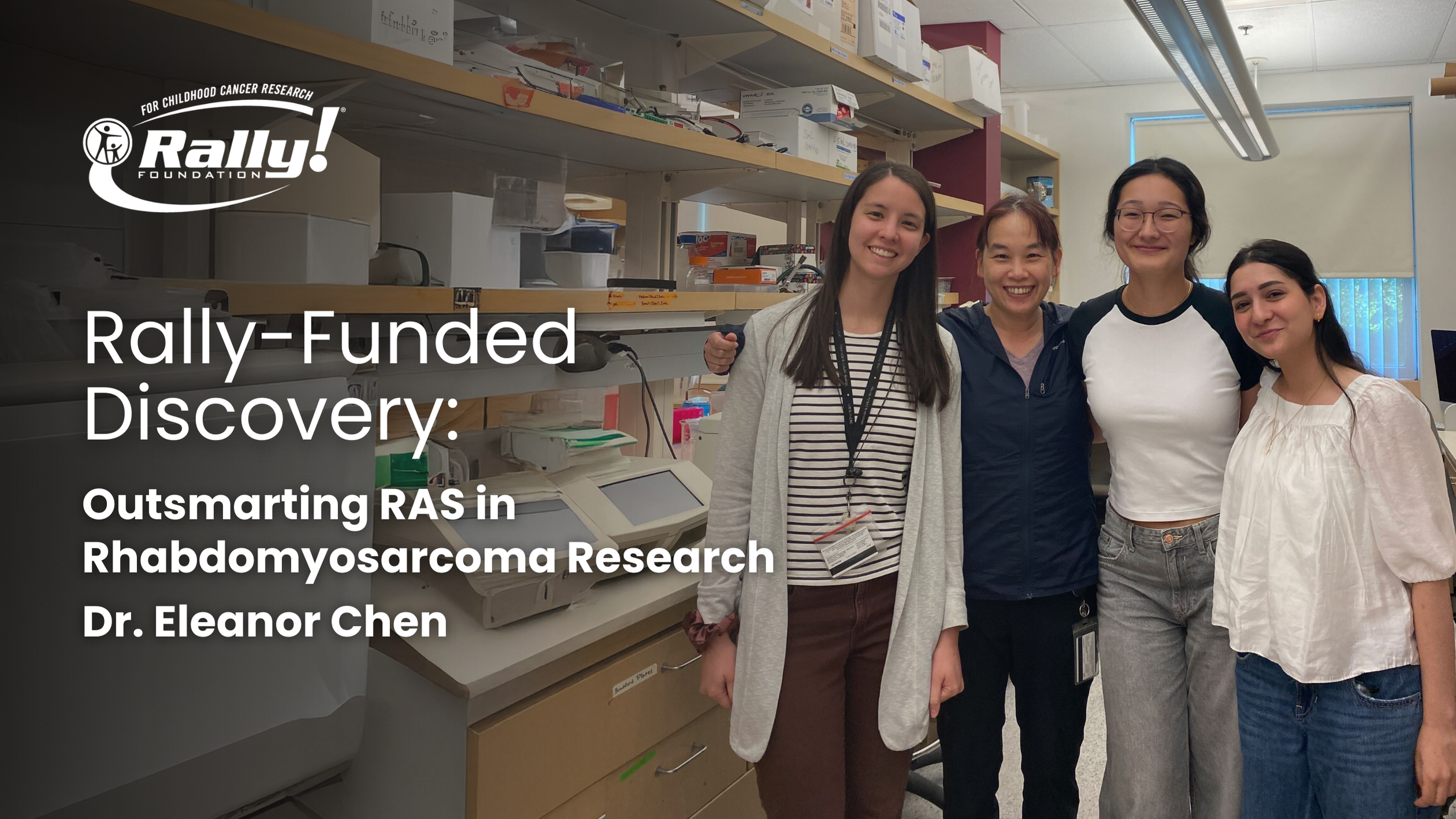
Did you know scientists can use viruses to fight cancer? It sounds wild, but it’s real. Eleanor Chen, M.D., Ph.D., is a researcher at the...
At Rally Foundation, we believe that one discovery can change everything and sometimes, all it needs is a seed. From 2007 to 2015, we...
Jennifer Kalish, M.D., Ph.D., and her team at Children’s Hospital of Philadelphia are studying a rare condition called Beckwith-Wiedemann...
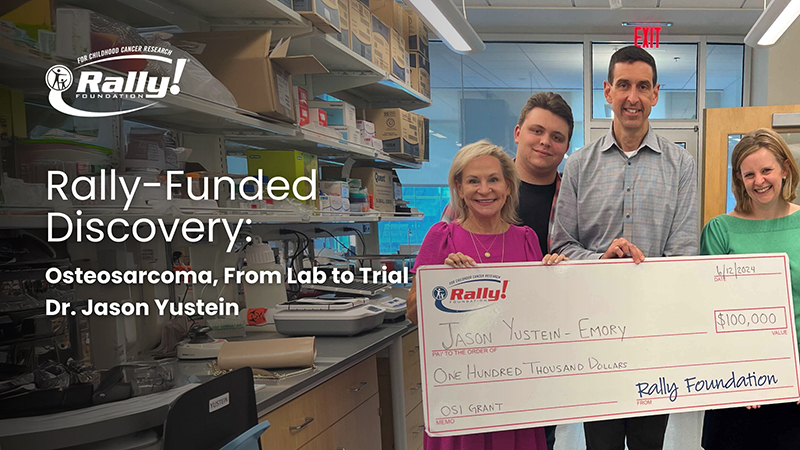
Jason Yustein, M.D., Ph.D., has spent years studying osteosarcoma, the most common bone cancer in kids and teens. Osteosarcoma is tough...
When government research funding ran out, the lab of John O’Bryan, Ph.D., at the Medical University of South Carolina faced a tough moment. Their important work on pediatric neuroblastoma, an aggressive childhood cancer, was at risk of stopping. Then Rally Foundation for Childhood Cancer Research stepped in with a grant that changed everything. “Rally Foundation’s support was instrumental,” Dr. O’Bryan said. “It came at a critical time when we had no National Institutes of Health (NIH) funding...
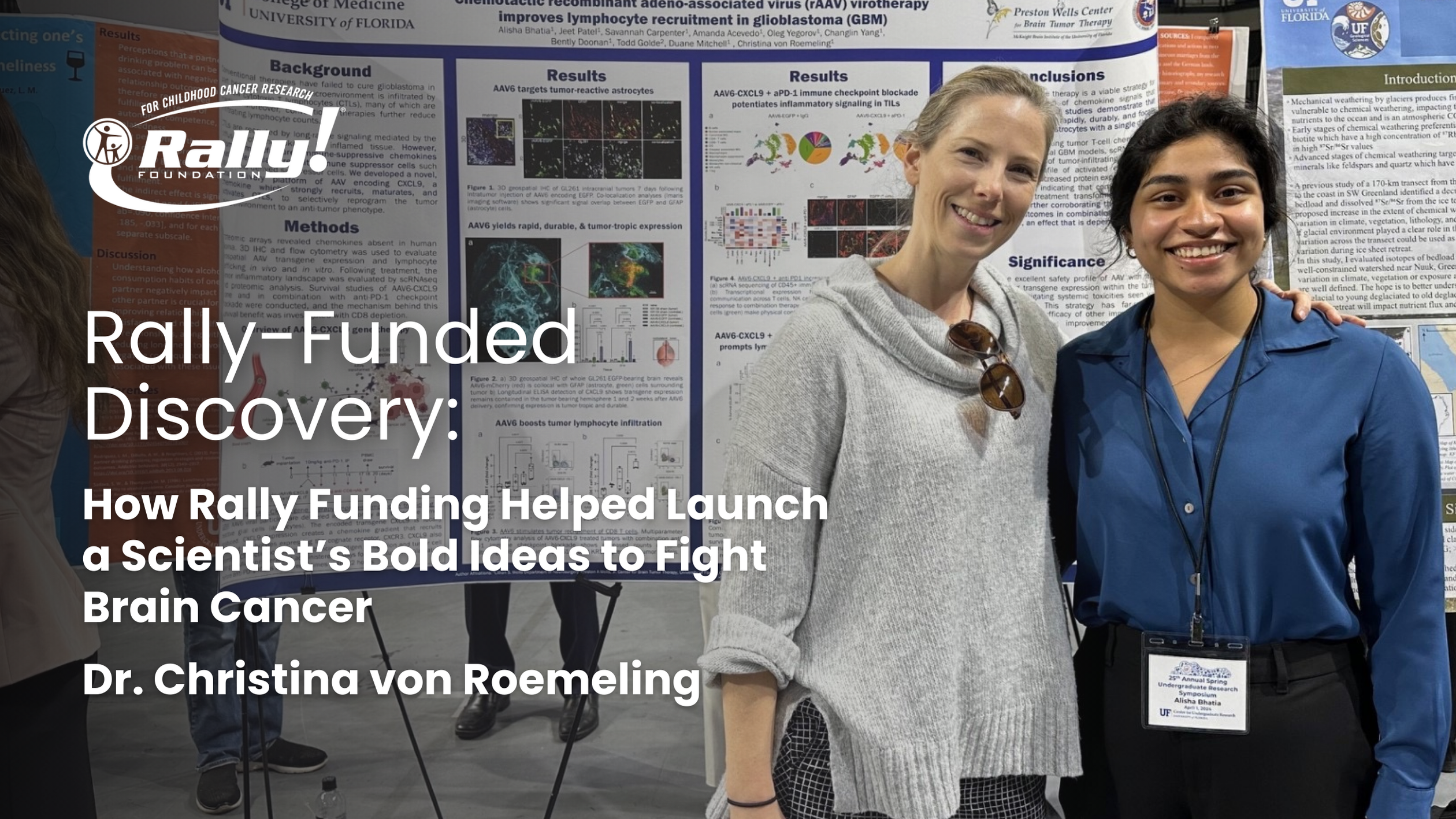
Christina von Roemeling, Ph.D., is on a mission to find better ways to treat brain tumors. When she was just starting her scientific career, Rally Foundation for Childhood Cancer Research gave her an important boost, a Postdoctoral and Clinical Research Fellow Grant in 2020. That support came during a tough time. Many research funders paused their work during the COVID-19 pandemic, but Rally kept going. This allowed Dr. von Roemeling to continue her work without delay. “The Rally Foundation...
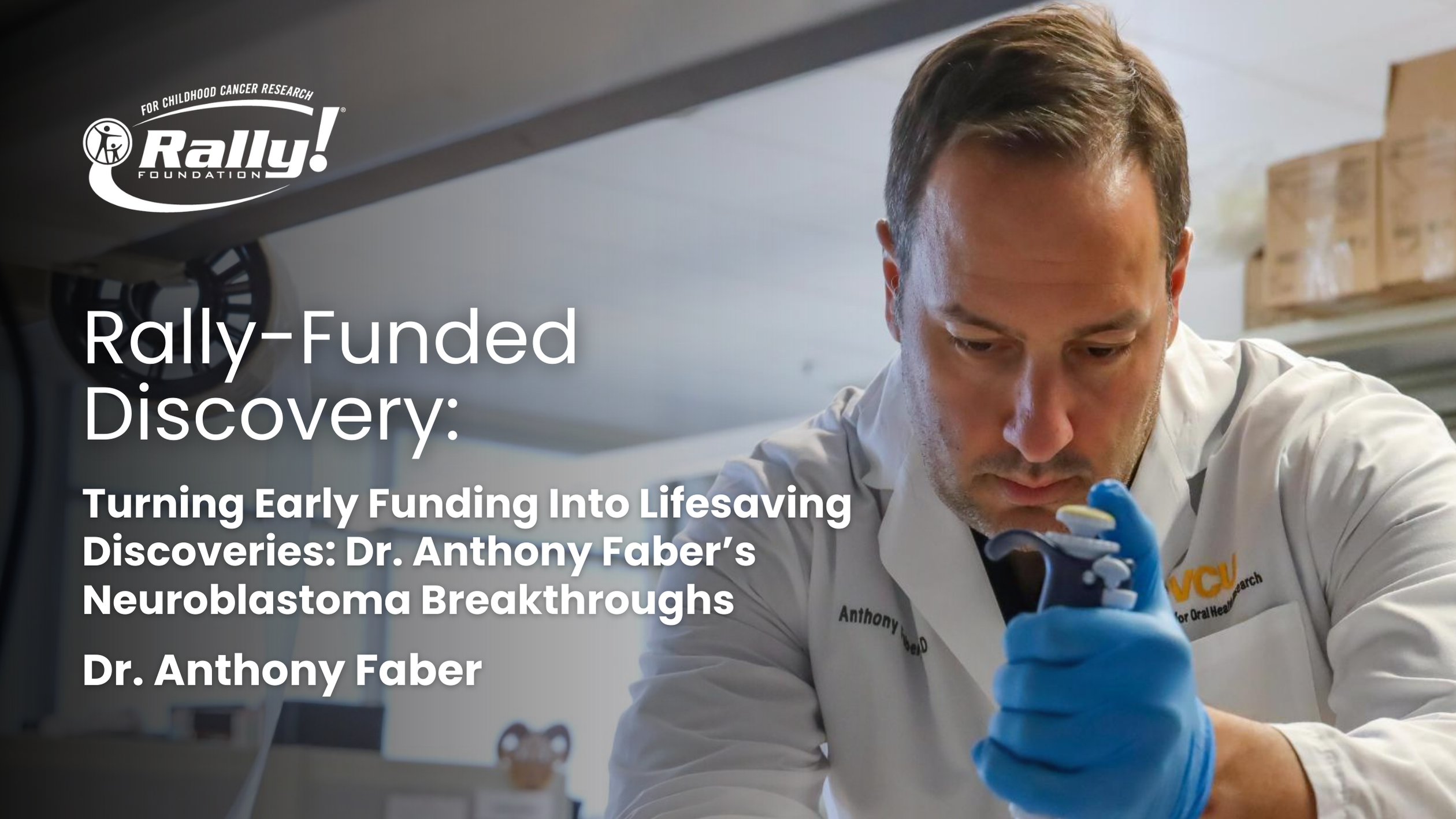
What if $100,000 could unlock $3.5 million and help bring new treatments to kids with cancer? That’s exactly what happened with Anthony Faber, Ph.D., a researcher at Virginia Commonwealth University, who received three grants from Rally Foundation for Childhood Cancer Research to fuel his groundbreaking work in neuroblastoma. Thanks to early seed funding from Rally Foundation: Dr. Faber discovered that venetoclax, a medicine that blocks a survival protein used by cancer cells, was effective...
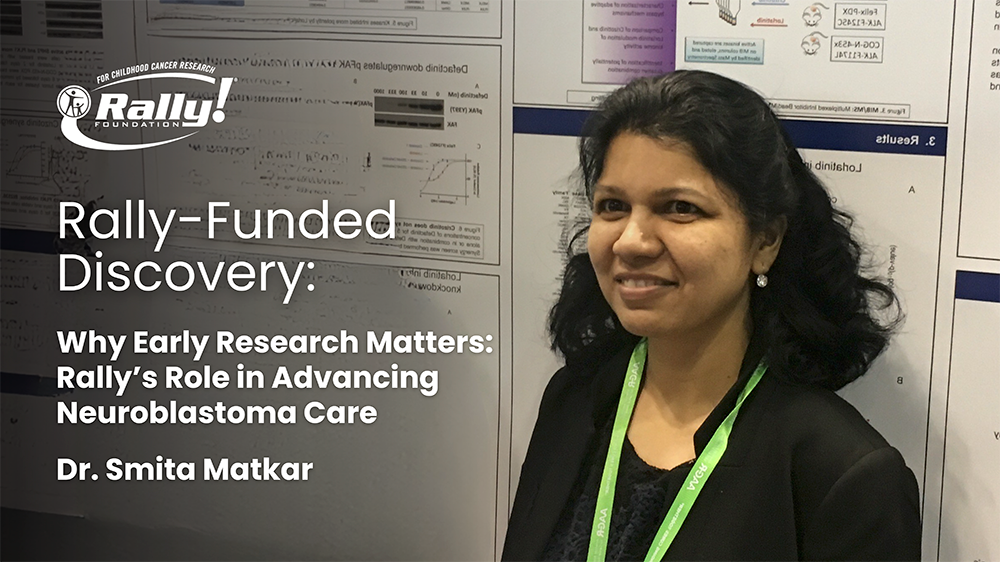
In 2020 and 2023, Smita Matkar, Ph.D., at the Children’s Hospital of Philadelphia (CHOP) received early research funding from Rally Foundation for Childhood Cancer Research. That support opened the door to study a hopeful idea. Could a type of targeted medicine, called an ALK inhibitor, help children with neuroblastoma, a cancer of the nervous system? Dr. Matkar studied a newer ALK inhibitor called lorlatinib. She found that it worked better than older FDA approved medicines like crizotinib....
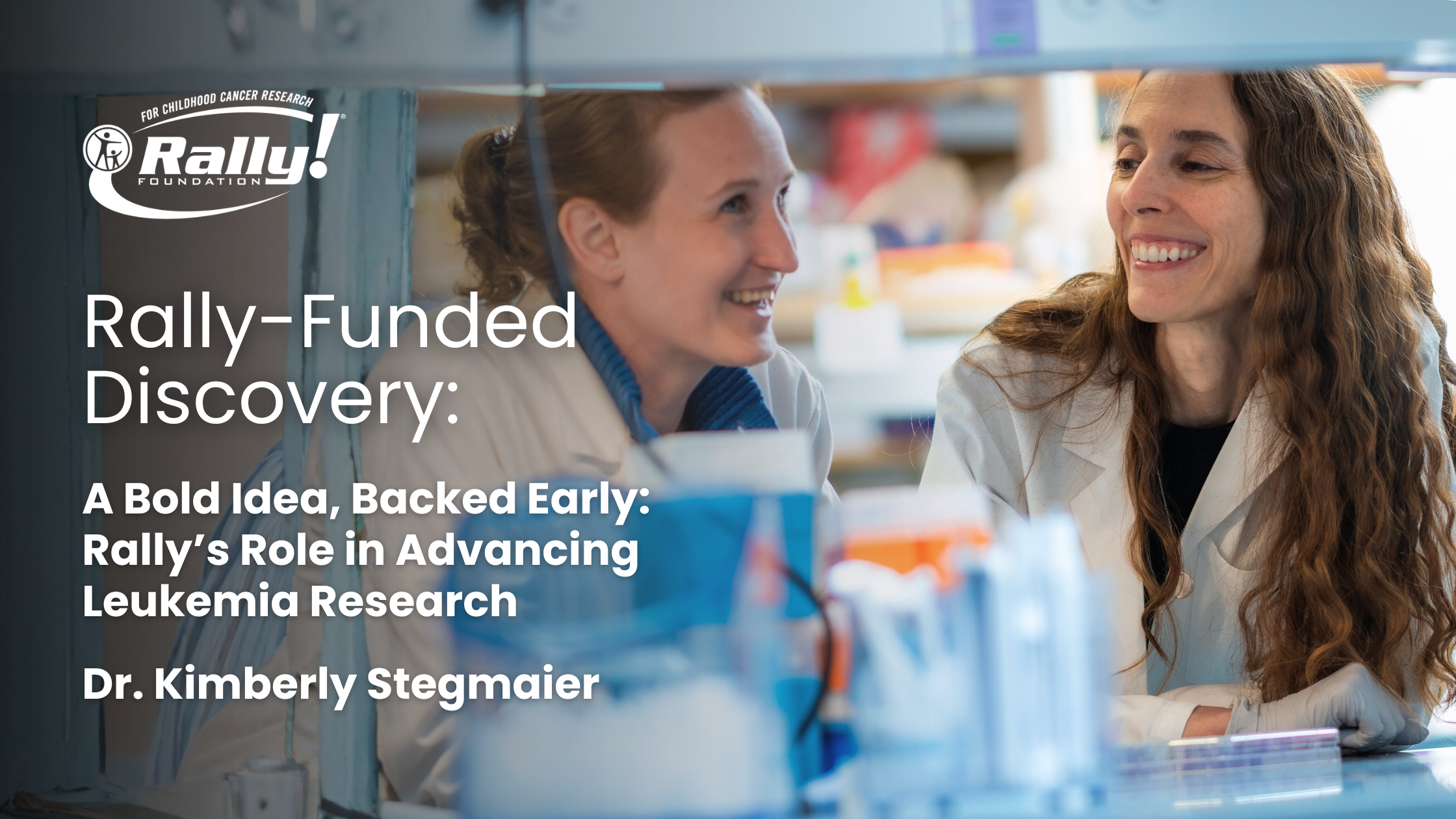
In 2016, Kimberly Stegmaier, M.D., at the Dana-Farber Cancer Institute received early research funding from Rally Foundation for Childhood Cancer Research. That support allowed her team to explore a bold question. Could turning off two important enzymes, SHMT1 and SHMT2, slow down or even stop T-cell acute lymphoblastic leukemia, a type of childhood blood cancer that is very hard to treat when it returns? Dr. Stegmaier and her team tested a compound called RZ-2994 that blocks both SHMT1 and...
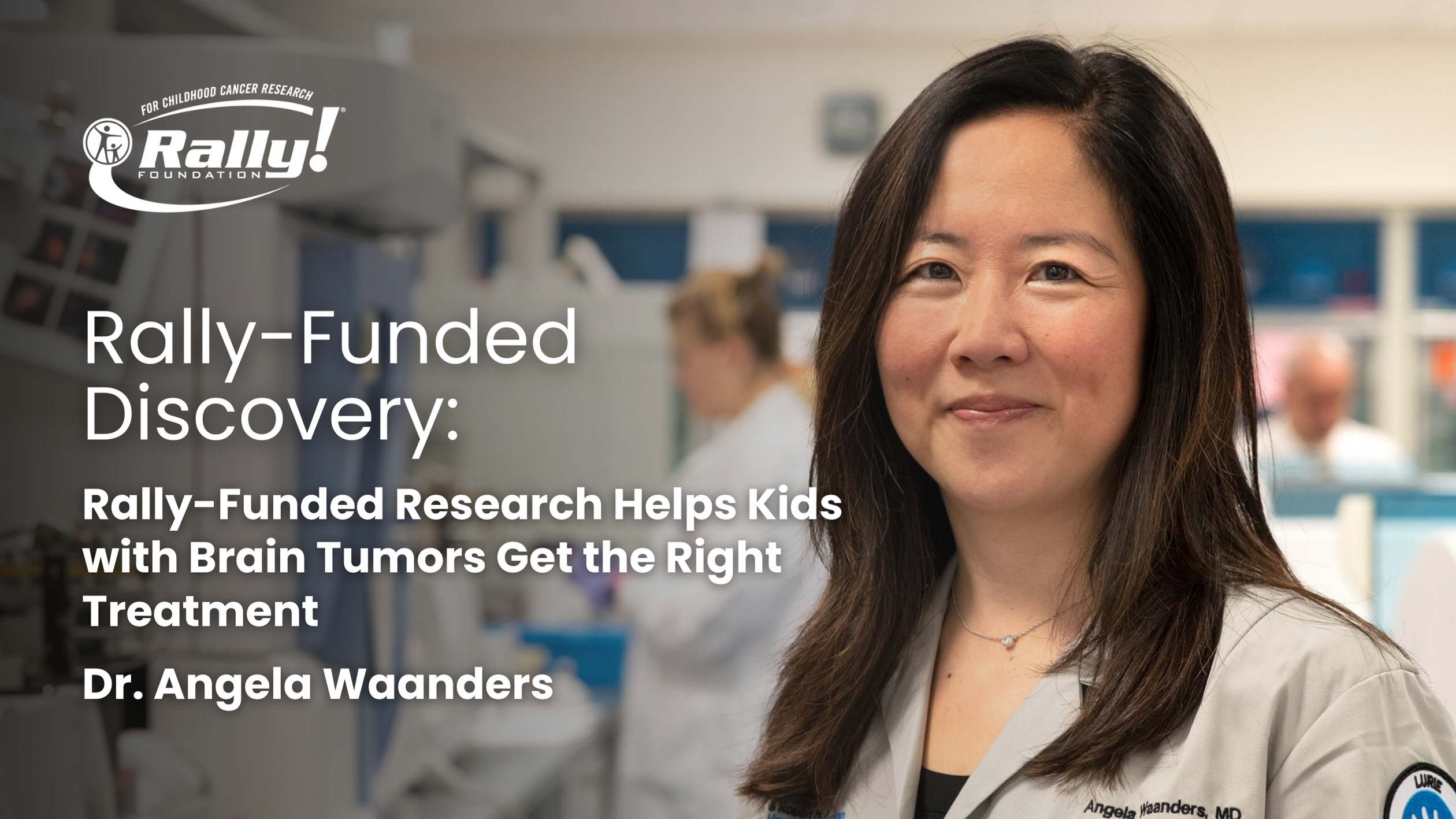
When Angela Waanders, M.D., M.P.H, was just beginning her research career at Children’s Hospital of Philadelphia, Rally Foundation for Childhood Cancer Research awarded her a $20,000 seed grant to help answer a big, urgent question: Why did the same cancer drug help some kids' brain tumors but make others worse? Dr. Waanders was studying a gene called BRAF, which helps control how cells grow. When BRAF mutates, it can lead to cancer. Her research focused on two different types of BRAF...